

Neck Pain: Common Causes, Symptoms, Treatment, and Home Relief Tips
![Person holding the back of the neck with neck pain – insert image here]
Neck pain is a common problem that can affect your work, sleep, mood, and daily activities. Some people feel a dull ache in the neck, while others experience sharp pain, stiffness, burning, or pain that spreads into the shoulders, arms, or upper back.
In many cases, neck pain is caused by simple daily habits such as poor posture, sitting too long, sleeping in the wrong position, stress, or overusing the neck muscles. However, neck pain can also happen because of injury, aging, nerve problems, arthritis, or other health conditions.
The good news is that most neck pain is not serious and can improve with conservative care, including gentle exercise, hot or cold therapy, posture changes, stress reduction, and proper rest. But if neck pain is severe, long-lasting, or comes with warning symptoms like numbness, weakness, fever, dizziness, or loss of coordination, you should see a healthcare provider.
What Is Neck Pain?
Neck pain is discomfort in or around the cervical spine, which is the upper part of the spine located below your head. This area supports the weight of your head and allows you to move it in different directions.
Neck pain may be short-term or long-term. Acute neck pain usually lasts from a few days to several weeks. Chronic neck pain lasts longer than three months and may come back often if the root cause is not addressed.
There are two common patterns of neck pain:
Axial neck pain means the pain stays mostly in the neck area.
Radicular neck pain means the pain travels from the neck into nearby areas, such as the shoulders, arms, hands, or upper back. This may happen when a nerve is irritated or compressed.
![Illustration of neck and cervical spine – insert image here]
What Does Neck Pain Feel Like?
Neck pain can feel different from person to person. Some people feel mild soreness, while others feel intense pain that makes it hard to turn the head.
Common symptoms include:
Persistent aching in the neck
Sharp, stabbing, or burning pain
Stiffness in the neck and shoulders
Pain that spreads to the shoulder or arm
Headache
Upper back tightness
Difficulty turning or tilting the head
Numbness or tingling in the shoulders, arms, or hands
If your neck pain affects your ability to work, sleep, drive, or move normally, it should not be ignored.
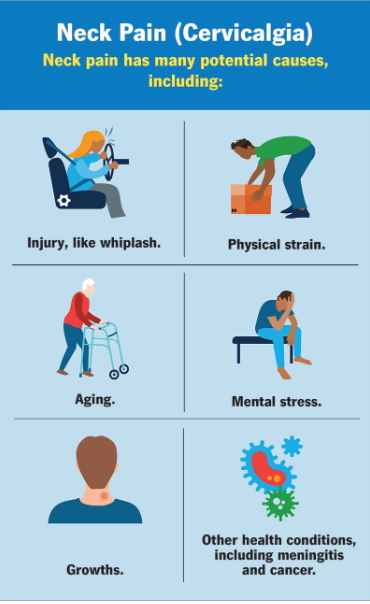
Common Causes of Neck Pain
Neck pain can come from many different sources. Some causes are related to lifestyle habits, while others are connected to injury, aging, or medical conditions.
1. Poor Posture
Poor posture is one of the most common causes of neck pain. When you sit with your head forward, round your shoulders, or look down at your phone for long periods, your neck muscles have to work harder to support your head.
This is often called “tech neck.” It is common among office workers, students, drivers, gamers, and people who spend many hours on phones or laptops.
To reduce posture-related neck pain:
Keep your screen at eye level
Sit with your back supported
Keep your shoulders relaxed
Avoid looking down at your phone for long periods
Take short breaks to stretch and move
Keep your head aligned with your spine
2. Muscle Strain and Overuse
Neck muscles can become sore when they are overused. This can happen from repetitive movements, heavy lifting, intense exercise, long driving, poor sleeping position, or working at a desk for many hours.
Muscle strain may cause stiffness, tenderness, tightness, and reduced range of motion.
3. Stress and Muscle Tension
Mental stress can also cause neck pain. When you are stressed, your body may naturally tighten the muscles in your neck, shoulders, and upper back.
Many people do not notice this tension until the area becomes painful or stiff.
Stress-related neck pain may improve with:
Deep breathing
Meditation
Gentle stretching
Walking
Yoga
Better sleep
Relaxation breaks during the day
![Person stretching neck at desk – insert image here]
4. Aging and Wear-and-Tear
As you get older, natural changes in the spine can increase the risk of neck pain. The discs, joints, and bones in the cervical spine may gradually wear down over time.
Age-related conditions that may contribute to neck pain include osteoarthritis, spinal stenosis, herniated discs, and pinched nerves.
These problems may cause pain, stiffness, tingling, numbness, or weakness if nerves become irritated.
5. Injury or Trauma
Neck injuries can happen from car accidents, falls, sports injuries, or sudden movements. Whiplash is a common neck injury that happens when the head moves quickly forward and backward, often during a car accident.
Injury-related neck pain should be taken seriously, especially if the pain starts after trauma or comes with dizziness, weakness, numbness, or severe headache.
6. Other Health Conditions
Sometimes neck pain is related to a medical condition rather than simple muscle tension. Possible causes may include rheumatoid arthritis, infection, nerve compression, spinal problems, cysts, tumors, or other serious conditions.
These causes are less common, but they are important to rule out if symptoms are unusual, severe, or persistent.
How Is Neck Pain Diagnosed?
A healthcare provider usually starts by asking about your symptoms, daily activities, previous injuries, work habits, and when the pain started.
They may also perform a physical exam to check:
Neck movement
Head and neck alignment
Muscle tenderness
Strength
Reflexes
Numbness or tingling
Range of motion
In many cases, imaging tests are not needed right away. However, if the pain is severe, persistent, or linked to injury, a doctor may recommend tests such as:
X-ray: Helps show bone problems, arthritis changes, fractures, or alignment issues.
MRI: Gives a detailed view of nerves, discs, spinal cord, and soft tissues.
CT scan: May be used to look at bone changes or when MRI is not available.
Nerve tests: May help check nerve function if there is numbness, tingling, or weakness.
Lab tests: May be used if the doctor suspects infection, inflammation, or another medical condition.
Neck Pain Treatment Options
Treatment depends on the cause of the pain. The main goals are to reduce pain, improve movement, and prevent the problem from coming back.
1. Pain Relievers and Muscle Relaxers
For mild to moderate neck pain, doctors may recommend over-the-counter pain relievers such as NSAIDs or acetaminophen. In some cases, muscle relaxers may be prescribed for tight or spasming muscles.
Always follow dosage instructions and talk to a healthcare professional if you have other medical conditions or take other medications.
2. Physical Therapy
Physical therapy can be very helpful for neck pain, especially if the pain keeps returning. A physical therapist can teach exercises to improve strength, flexibility, posture, and range of motion.
Physical therapy may also help correct movement habits that are putting stress on the neck.
3. Hot and Cold Therapy
Hot and cold therapy can help relieve neck pain at home.
Use cold therapy shortly after an injury or when there is swelling. Wrap an ice pack or frozen vegetables in a towel and apply it for about 15 minutes.
Use heat for tight or stiff muscles. A warm towel, heating pad, or hot shower may help relax the muscles and improve blood flow.
4. TENS Therapy
A TENS unit uses low-level electrical current to help reduce pain signals. Some people find it useful, but it is best to ask a healthcare provider before using one, especially if you have medical conditions.
5. Steroid Injections
If inflammation around a nerve root is causing pain, a doctor may recommend a steroid injection. This treatment may help reduce inflammation and relieve pain in certain cases.
6. Massage, Acupuncture, or Chiropractic Care
Some people use massage to relax tight muscles. Acupuncture or chiropractic care may also help some cases of neck pain. These options should be used carefully and are best discussed with a healthcare provider, especially if you have nerve symptoms or a serious neck condition.
7. Surgery
Most neck pain does not require surgery. Surgery may be considered only when there is a serious structural problem, such as nerve compression, spinal instability, or a disc issue that does not improve with other treatments.
![Physical therapist helping patient with neck mobility – insert image here]
Home Remedies for Neck Pain Relief
Many mild cases of neck pain can improve with home care.
Try these simple tips:
Apply cold therapy after a new injury
Use heat for stiff muscles
Practice gentle neck stretches
Improve your posture
Take breaks from sitting
Avoid sleeping on your stomach
Use a supportive pillow
Keep your phone and laptop at eye level
Reduce stress with breathing or meditation
Stay active with light movement
Avoid carrying heavy bags on one shoulder
Do not force neck exercises if you have severe pain, a recent injury, or symptoms of a pinched nerve.
How Long Does Neck Pain Take to Heal?
Healing time depends on the cause. Neck pain from mild strain or stress may improve within one to two weeks. Some cases may take longer, especially if the pain is related to posture, disc problems, arthritis, or nerve irritation.
If your neck pain does not improve after a week of home care, becomes worse, or affects your daily life, consider speaking with a healthcare provider.
How to Prevent Neck Pain
Preventing neck pain often comes down to improving your daily habits.
Practice Good Posture
Keep your head aligned with your spine. Avoid letting your head lean forward for long periods. Keep your shoulders relaxed and your back supported when sitting.
Adjust Your Workspace
Your monitor should be directly in front of you and close to eye level. Your keyboard and mouse should be easy to reach. Your chair should support your lower back.
Improve Your Sleep Position
Sleep on your back or side with a pillow that supports your neck. Avoid sleeping on your stomach because it can twist your neck for hours.
Stay Active
Movement helps keep your muscles strong and flexible. If you sit for long periods, stand up and stretch during the day.
Avoid Heavy Shoulder Bags
Carrying heavy bags on one shoulder can create imbalance and strain. Use a backpack, rolling bag, or lighter load when possible.
Strengthen Your Upper Back
A weak upper back can cause the shoulders to round forward and the head to drift forward, increasing neck strain.
Helpful exercises may include:
Scapular squeezes
Standing wall push-ups
Resistance band rows
Start slowly and stop if any exercise causes pain.
When to See a Doctor for Neck Pain
You should contact a healthcare provider if neck pain interferes with work, sleep, driving, or daily activities.
Seek urgent medical care if neck pain:
Starts after an accident or fall
Comes with numbness or tingling in the arms, shoulders, or legs
Comes with weakness or loss of coordination
Happens with headache, dizziness, nausea, or vomiting
Comes with fever, chills, or unexplained weight loss
Does not improve with over-the-counter medication
Does not improve after one week
Occurs with loss of bladder or bowel control
These symptoms may point to a more serious problem that needs medical attention.
Final Thoughts
Neck pain is common, but it can affect your quality of life if you ignore it. Many cases are caused by poor posture, muscle strain, stress, sleeping position, aging, or overuse.
The best approach is to combine simple home care with better daily habits. Use heat or cold therapy when needed, stretch gently, improve your posture, set up your workspace correctly, reduce stress, and stay active.
If your pain is severe, lasts longer than expected, spreads into your arms, or comes with numbness, weakness, fever, dizziness, or other unusual symptoms, see a healthcare provider for proper diagnosis and treatmen