

Tai Chi for Beginners Review
Life in digital marketing can be a whirlwind. Long hours, constant screen time, and the pressure to perform often leave me feeling mentally drained and physically stiff. I found myself increasingly looking for ways to de-stress, improve my focus, and find a low-impact exercise that wouldn’t further tax my joints after years of sitting. That’s when Tai Chi popped onto my radar. I’d heard about its benefits for balance, relaxation, and mental clarity, and it seemed like the perfect antidote to my fast-paced lifestyle.
My initial search led me to various online courses and local classes, but many were either too expensive, didn’t fit my erratic schedule, or felt a bit intimidating for an absolute beginner. I wanted something I could try out at my own pace, without a huge upfront commitment. This desire for an accessible, self-guided introduction is precisely why “Tai Chi for Beginners” caught my eye on Amazon. It promised a step-by-step approach, and as someone who appreciates structured learning, it seemed like a promising starting point for my journey into this ancient practice.
I was looking for a clear, no-nonsense guide that would explain the fundamentals without overwhelming me with jargon or complex movements right off the bat. My main problem was finding a reliable resource that could translate the subtle art of Tai Chi into something I could actually do from my living room. Could an eBook truly teach a physical discipline? I was skeptical but hopeful, and that curiosity drove me to dive deep into “Tai Chi for Beginners” to see if it delivered on its promises.
Quick Summary / Key Takeaways
⭐ 3.8 out of 5
- Who This Is For: Absolute beginners interested in the theoretical foundations and basic movements of Tai Chi, self-starters, and those on a budget.
- Main Benefit: Provides a solid theoretical understanding and step-by-step textual guidance for foundational Tai Chi forms and principles, accessible anytime.
- Biggest Drawback: As an eBook, it inherently lacks visual demonstrations and real-time feedback, which are crucial for mastering a physical art form like Tai Chi.
- Value Assessment: Excellent value for its low cost if you understand its limitations as a text-based guide; less valuable if you expect a comprehensive, interactive learning experience.
What Is Tai Chi for Beginners?
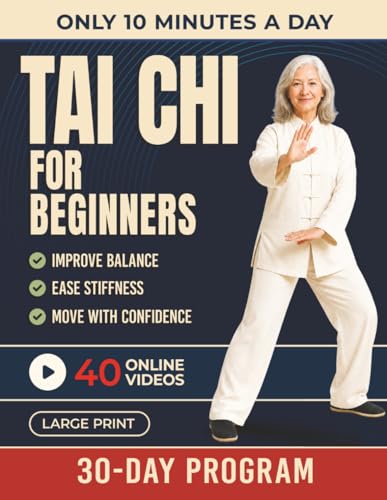
“Tai Chi for Beginners” is a digital eBook available on Amazon Kindle, designed to introduce complete novices to the practice of Tai Chi. Authored by Dr. David Lee, it aims to provide a comprehensive, step-by-step guide to understanding and performing basic Tai Chi movements and forms. The core outcome it delivers is a foundational knowledge of Tai Chi’s history, philosophy, health benefits, and practical application of its fundamental stances and movements, all from the comfort of your home.
The product positions itself as an accessible entry point for anyone looking to harness Tai Chi for health, relaxation, and even self-defense. It’s structured to guide the reader through the theoretical underpinnings before moving into practical exercises. The format is purely text-based, supplemented by descriptions that attempt to convey the fluidity and precision required for the movements. It’s essentially a digital textbook for learning a physical art, emphasizing a methodical approach to self-study.
Inside the Package – What You Get
As a Kindle eBook, “Tai Chi for Beginners” delivers its content entirely through digital text. Here’s a breakdown of what you can expect to find within its virtual pages:
- Introduction to Tai Chi: A detailed overview of Tai Chi’s origins, philosophy, and the various styles, setting the historical and cultural context for the practice.
- Health Benefits & Principles: Chapters dedicated to explaining the physical and mental advantages of Tai Chi, such as improved balance, flexibility, stress reduction, and enhanced qi (energy) flow.
- Warm-Up Exercises: A series of gentle stretches and preparatory movements crucial for loosening the body and preventing injury before engaging in the main forms.
- Basic Stances and Postures: Detailed descriptions of fundamental Tai Chi stances, weight distribution, and body alignment, which are the building blocks of all movements.
- Step-by-Step Form Instructions: The core of the book, providing sequential instructions for learning a foundational Tai Chi form (likely a simplified Yang style, though not explicitly stated on the product page, it’s common for beginner books). Each movement is broken down into manageable steps.
- Breathing Techniques: Guidance on proper diaphragmatic breathing, integral to Tai Chi practice for cultivating energy and promoting relaxation.
- Meditation & Mindfulness: Sections that delve into the meditative aspects of Tai Chi, encouraging mental focus and present moment awareness.
- Self-Defense Applications: A brief exploration of how Tai Chi principles can be applied to self-defense, offering a different perspective on the movements.
Features & Benefits
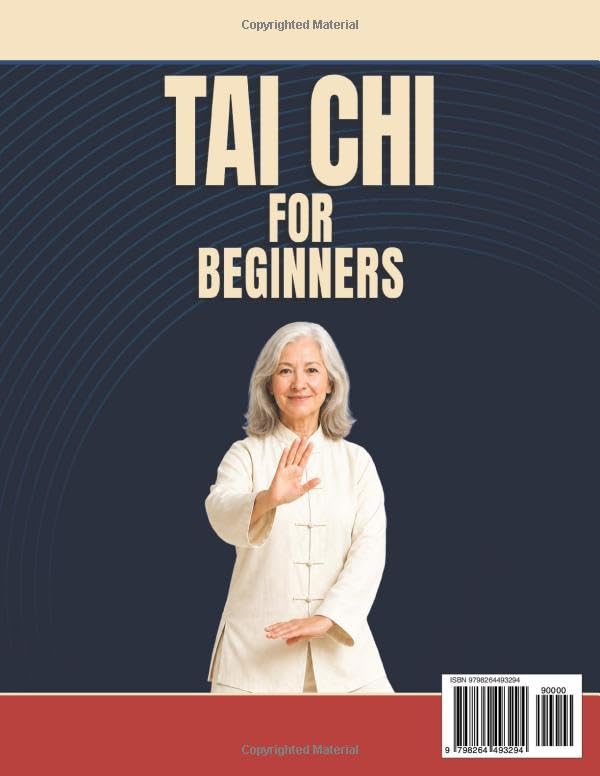
“Tai Chi for Beginners” comes with several features designed to help new practitioners, and each offers a distinct benefit.
- Feature: Step-by-Step Instructions for Forms. The book meticulously breaks down each Tai Chi movement into sequential, easy-to-follow steps.
- Benefit: This clear progression reduces overwhelm for beginners, allowing them to learn at their own pace. For example, instead of seeing a complex sequence, you learn “Shift weight to left, turn waist slightly, extend right arm” – making it manageable.
- Feature: Comprehensive Theoretical Background. It delves into the history, philosophy, and health principles of Tai Chi.
- Benefit: Understanding the ‘why’ behind the movements deepens your practice beyond mere physical imitation. Knowing about “qi” or “yin and yang” makes the slow, deliberate movements more meaningful and engaging.
- Feature: Focus on Health & Relaxation. The content consistently highlights Tai Chi’s advantages for stress reduction, balance, and overall well-being.
- Benefit: This directly addresses the common reasons people seek Tai Chi, providing motivation and reinforcing the positive outcomes you can expect from consistent practice. It helps you connect the physical movements to your personal health goals.
- Feature: Portable Digital Format. Being an eBook, it’s accessible on any Kindle-compatible device.
- Benefit: You can literally take your Tai Chi instructor with you anywhere. Whether you’re traveling, at a park, or just in a different room, your guide is always at your fingertips, making consistent practice much easier.
How It Works / My Experience Using It
My experience with “Tai Chi for Beginners” was a mixed bag, largely due to the inherent nature of learning a physical art from a text-based format. After purchasing and downloading the eBook, I started from the beginning, reading through the history and philosophy sections. This part was genuinely engaging; Dr. Lee does a good job of setting the stage and explaining the “why” behind Tai Chi, which built my motivation.
When I got to the practical sections – the warm-ups, basic stances, and then the actual form instructions – things became more challenging. I’d read a step like, “Shift your weight to the right, turn your waist, and extend your left arm as if pushing water,” then I’d try to visualize it and perform it. What worked well was the detailed breakdown of each step; the author tried hard to be explicit. However, what was confusing was translating those words into precise body mechanics. How far should my arm extend? What’s the exact angle of my wrist? Am I maintaining the correct posture? Without a visual reference or someone to correct me, I often felt unsure if I was doing it right.
I found myself rereading descriptions multiple times, trying to imagine the movement from different angles. It was particularly difficult with transitions between moves, where the fluidity is key in Tai Chi. My movements felt choppy and disconnected initially. What surprised me was how much mental effort it required just to interpret the instructions, let alone perform them. I learned a lot about the principles, but the physical execution was a slow, sometimes frustrating, process of trial and error. I resorted to looking up videos for specific moves to supplement what I was reading, which highlighted the book’s main limitation.
Who Should Buy This (And Who Should NOT)
Who Should Buy This:
- Absolute Beginners with a Strong Interest in Theory: If you’re fascinated by the philosophy, history, and health benefits of Tai Chi and want to build a solid intellectual foundation before diving deep into physical practice, this book is an excellent starting point.
- Self-Motivated & Disciplined Learners: Individuals who are comfortable learning independently from text, are patient with their progress, and can visualize movements effectively will get the most out of this guide.
- Budget-Conscious Individuals: At its Kindle price point, this is a very affordable way to explore Tai Chi without committing to expensive classes or video courses. It’s perfect for testing the waters.
- Supplements to Other Learning: If you’re already taking a class or watching videos and want a detailed reference guide to deepen your understanding of the principles and individual movements, this eBook can be a valuable companion.
Who Should NOT Buy This:
- Visual Learners: If you struggle to translate written descriptions into physical actions and rely heavily on seeing movements performed, this book will likely frustrate you. The lack of diagrams or video links is a significant hurdle.
- Those Needing Real-Time Feedback: Tai Chi involves subtle body mechanics and posture. Without an instructor or visual aid to correct your form, you risk developing bad habits or misunderstanding movements.
- Impatient Learners Expecting Quick Mastery: Learning Tai Chi from a book requires immense patience and self-correction. If you’re looking for rapid progress or an interactive experience, this isn’t the right product.
- Individuals with Pre-existing Physical Limitations Requiring Supervision: While Tai Chi is low-impact, incorrect form can still lead to strain. If you have specific physical issues, learning unsupervised from a book might not be the safest approach.
Pros & Cons (Honest Assessment)
Here’s my honest take on the strengths and weaknesses of “Tai Chi for Beginners” after personally testing it:
Pros:
- Excellent Theoretical Foundation: The book excels at explaining the history, philosophy, and health benefits of Tai Chi, giving practitioners a deeper understanding beyond just the physical movements.
- Step-by-Step Clarity (Textually): For a text-based guide, the author does an admirable job breaking down complex movements into digestible, sequential steps, making it less intimidating for beginners.
- Affordable Entry Point: As a Kindle eBook, it offers a very low-cost way to explore Tai Chi, making it accessible to a wide audience who might be hesitant about more expensive options.
- Self-Paced Learning: You can read and practice at your own speed, revisiting sections as often as needed without feeling rushed by a class schedule or video pace.
- Focus on Principles: It emphasizes the underlying principles of Tai Chi (e.g., balance, relaxation, breathing), which are crucial for a genuine practice, not just rote memorization of forms.
Cons:
- Lack of Visual Demonstration: This is the biggest drawback. Learning a highly visual and physical art form like Tai Chi solely from text is incredibly challenging. Descriptions, no matter how detailed, cannot fully convey the fluidity, precise angles, or subtle weight shifts.
- No Real-Time Feedback: Without an instructor or even video to mimic, there’s no way to know if your form is correct, leading to potential misinterpretations or the development of incorrect habits.
- Requires High Self-Discipline and Visualization Skills: Users must be highly motivated and possess strong spatial reasoning to translate written words into accurate physical movements, which not everyone has.
- Limited Practical Application for Self-Defense: While the book mentions self-defense, learning these applications effectively from text alone is virtually impossible; it requires interactive drills and sparring.
Pricing & Value – Is It Worth It?
“Tai Chi for Beginners” is priced as a standard Kindle eBook, typically in